

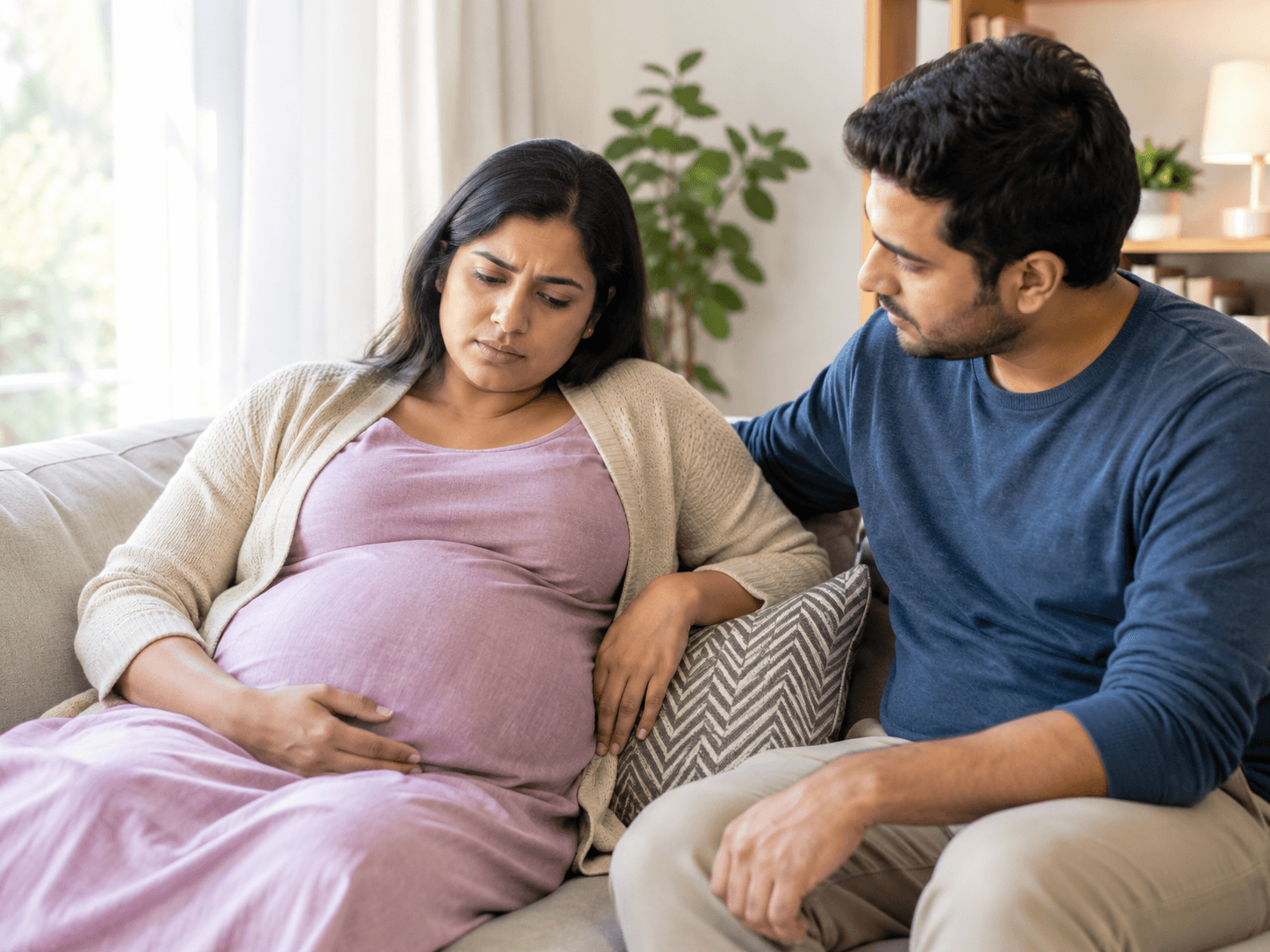
Period-like cramps in the third trimester may be caused by common pregnancy changes or labour. Learn the warning signs, possible causes, and when to contact your maternity team.
Experiencing period like cramps during the last few months of pregnancy can feel worrying, especially if this is your first baby. You might wonder whether your body is preparing for labour or whether something needs medical attention.
Period cramps during pregnancy in the third trimester can have several causes. Some are related to normal pregnancy changes, while others may signal labour or a pregnancy complication. The timing, intensity, pattern of the cramps, and any other symptoms can help your healthcare team assess what is happening.
Let's look at the possible causes, how labour cramps may feel, and when you should seek medical help.
Are Period-Like Cramps Normal in the Third Trimester?
Mild cramps can occur during late pregnancy, but they should not automatically be considered normal. Braxton Hicks contractions, constipation, and pressure from your growing uterus may cause discomfort. However, menstrual-like cramps can also be a sign of labour, including preterm labour before 37 completed weeks. ACOG explains the warning signs of preterm labour.
If the cramps are new, keep returning, or feel different from your usual pregnancy discomfort, contact your obstetrician or maternity unit for advice.
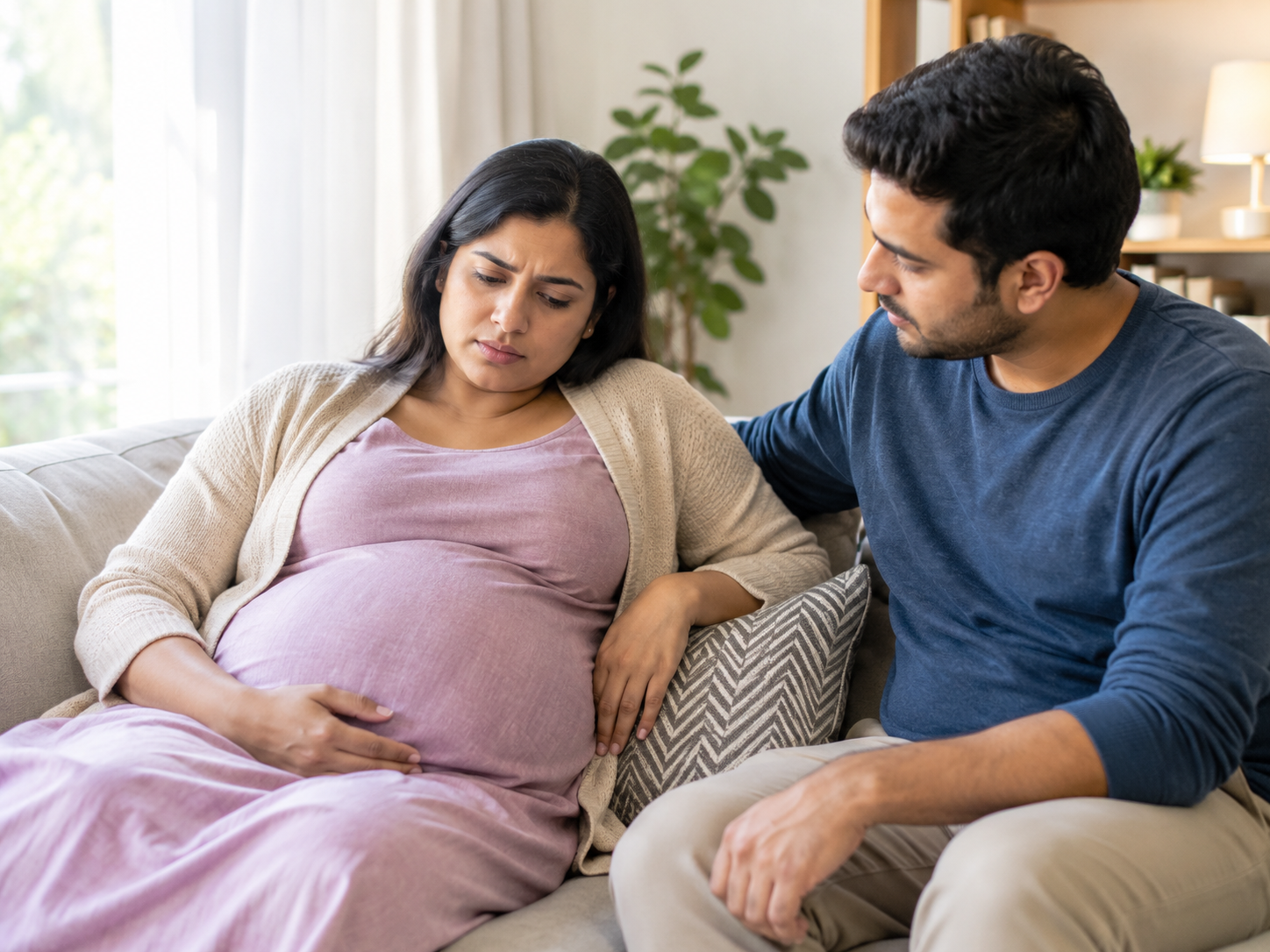
What Causes Period Cramps During Pregnancy in the Third Trimester?
1. Braxton Hicks Contractions
Braxton Hicks contractions are often described as practice contractions. Your abdomen may feel tight or firm for a short period before relaxing again.
They are generally irregular and do not consistently become stronger or closer together. Some women find them uncomfortable, while others barely notice them.
However, you cannot always distinguish practice contractions from labour by how they feel. Contact your maternity team if contractions are painful, recurring, or concerning.
2. Pressure From Your Growing Baby
As your baby grows, your body undergoes changes that can create pressure around the pelvis, lower abdomen, and back. You may notice heaviness or mild discomfort when standing, walking, or changing positions.
Resting or adjusting your position may help with minor discomfort. Persistent or severe pain, however, needs medical assessment rather than being attributed to the baby's position.
3. Constipation and Trapped Gas
Digestive discomfort is another possible cause of abdominal cramps during pregnancy. Hormonal changes and pressure on the digestive system can contribute to constipation, bloating, and trapped gas.
You may find it helpful to drink enough water, eat fibre-rich foods, and stay gently active if your healthcare professional has approved exercise.
If the pain continues or you are unsure whether it is digestive discomfort or uterine cramping, seek medical advice.
4. Labour or Preterm Labour
Labour contractions may feel like period pain, lower backache, or tightening across the abdomen. They often become more regular, stronger, and closer together as labour progresses.
Before 37 weeks, recurring menstrual-like cramps can be a warning sign of preterm labour. Other possible signs include pelvic pressure, a persistent dull backache, changes in vaginal discharge, or fluid leaking from the vagina.
Do not wait for the cramps to become severe before contacting your maternity team.
How Can You Tell Braxton Hicks From Labour Cramps?
The following comparison can help you understand the differences, although it cannot confirm whether you are in labour.
Feature | Braxton Hicks | Possible labour contractions |
|---|---|---|
Pattern | Usually irregular | May become regular |
Intensity | Usually does not steadily increase | Often becomes stronger |
Frequency | Does not consistently get closer together | May occur more frequently |
Other symptoms | Abdominal tightening | May occur with backache, pelvic pressure, bleeding, or fluid leakage |
These patterns can overlap. If you suspect labour, particularly before 37 weeks, contact your maternity unit rather than relying on this comparison alone.
When Should You Seek Medical Help?
It is important to recognise symptoms that need prompt attention. Contact your maternity unit or obstetrician immediately if you experience:
- Regular or repeated abdominal cramps, especially before 37 weeks.
- Vaginal bleeding or fluid leaking from the vagina.
- Severe, persistent, or worsening abdominal pain.
- A persistent lower backache accompanied by cramps.
- Reduced or noticeably changed baby movements.
- Unusual vaginal discharge alongside pain or contractions.
Do not wait for several symptoms to appear together. Reduced baby movements require prompt assessment even if you have no cramps. If you have severe pain, heavy bleeding, or another medical emergency, seek emergency care.
What Can You Do for Mild Pregnancy Cramps?
If the discomfort is mild, you have no warning signs, and your healthcare professional has not advised otherwise, you can try a few simple measures while monitoring your symptoms.
- Rest comfortably: Change position and avoid activities that make the discomfort worse.
- Drink water: Maintain your usual fluid intake unless you have been given a restriction.
- Empty your bladder: A full bladder may contribute to discomfort.
- Notice the pattern: Record when the cramps begin, how long they last, and whether they recur.
- Stay in touch with your maternity team: Ask for guidance if the cause is unclear or the discomfort continues.
These measures are not a substitute for medical assessment. Do not use home remedies or exercise to delay care when labour or another complication is possible.
Can Pregnancy Yoga Help With Third-Trimester Discomfort?
Pregnancy specific yoga may support relaxation, gentle mobility, and body awareness during an uncomplicated pregnancy. However, it cannot diagnose or treat the cause of unexplained abdominal cramps.
If you are experiencing cramps now, pause your yoga practice until you have received appropriate advice, particularly if the symptoms are new, persistent, or recurring. Seek urgent assessment if you notice any warning signs.
Once your healthcare professional confirms that exercise is appropriate, you can explore online prenatal yoga classes with pregnancy-specific modifications and guidance.
For general relaxation education, you can also read our guide to pregnancy breathing exercises. Practise only techniques that are appropriate for your individual pregnancy.
If you would like to ask about available classes, visit the CalmNest Yoga contact page.
Final Thoughts
Period-like cramps during the third trimester can occur for several reasons, ranging from digestive discomfort to contractions associated with labour. What matters most is how the cramps feel, whether they keep returning, and whether other symptoms appear.
If you experience regular cramps, persistent or severe pain, bleeding, leaking fluid, or reduced baby movements, contact your maternity team promptly. When something feels unusual, it is always better to get checked than to assume everything is normal.
You can explore the CalmNest Yoga website for pregnancy wellness resources, but always speak with a qualified healthcare professional about new or unexplained symptoms.